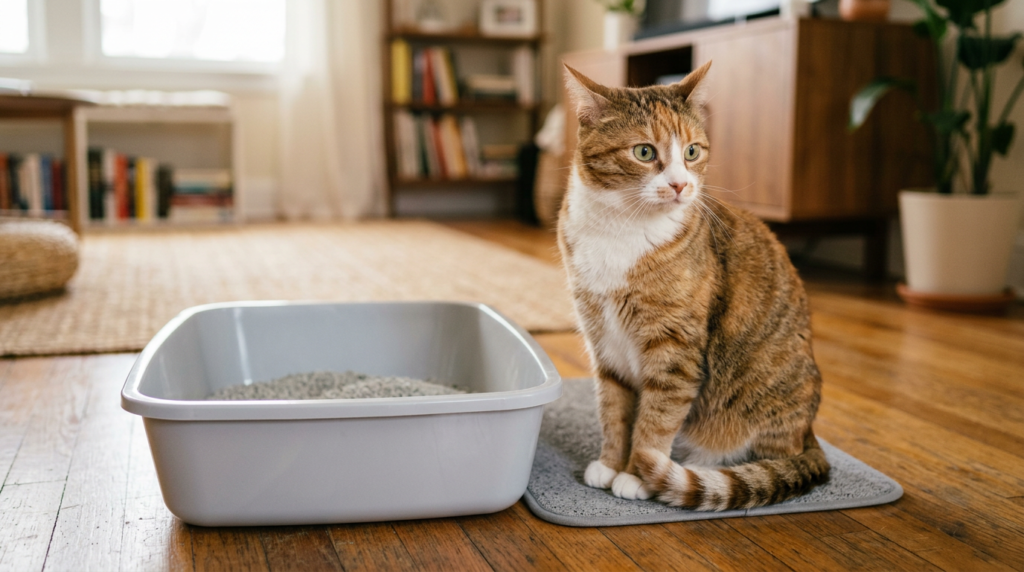
If your cat has suddenly stopped using the litter box — or never quite took to it in the first place — you’re not alone. This is one of the most common concerns among cat owners in Malaysia, and the good news is: it’s usually fixable.
Before assuming it’s a behaviour problem, it’s worth knowing that cats avoid the litter box for very specific reasons. Once you identify the root cause, the solution often becomes clear. Let’s walk through the most likely culprits.
Table of Contents
1. The Litter Box Is Not Clean Enough
Cats are fastidiously clean animals. If the litter box smells bad to you, imagine how it smells to your cat — their sense of smell is roughly 14 times stronger than ours.
Fix it:
- Scoop the box at least once daily, ideally twice.
- Do a full litter change and wash the box with mild soap weekly.
- Avoid strong-smelling cleaners like bleach or citrus — cats hate these scents.
2. You Recently Changed the Type of Litter
Cats are creatures of habit. Switching litter brands or textures — especially without a gradual transition — can cause your cat to reject the box entirely.
Fix it:
- When switching litters, mix the new litter with the old one gradually over 1–2 weeks.
- If your cat rejected a new litter, go back to the previous type and transition more slowly.
3. The Litter Box Is in a Bad Location
Cats need privacy and a sense of safety when using the litter box. A box placed in a noisy, high-traffic, or hard-to-reach area can cause avoidance.
Fix it:
- Place the box in a quiet, low-traffic spot — away from their food and water.
- Avoid putting it near washing machines, speakers, or areas with sudden loud noises.
- Make sure it’s always accessible — never behind a closed door.
4. The Litter Box Is Too Small
Many commercially available litter boxes are actually too small for adult cats. If your cat has to scrunch up or can’t turn around comfortably, they may seek alternatives.
Fix it:
- The box should be at least 1.5× the length of your cat.
- Consider an open top box if your cat seems hesitant with covered designs.
- Larger cats (like Maine Coons or big mixed breeds) may need an extra-large or DIY storage box solution.
5. You Don’t Have Enough Litter Boxes
The golden rule: one litter box per cat, plus one extra. So if you have two cats, you should have three boxes. With only one box for multiple cats, territorial stress or a dirty box is almost inevitable.
Fix it:
- Add an extra litter box in a different location.
- Separate boxes across floors if you live in a multi-storey home.
6. Your Cat May Have a Health Issue
If your cat suddenly starts avoiding the litter box — especially if they’re straining, crying, or producing very little urine — this is a medical emergency, not a behaviour problem.
- Urinary tract infection (UTI)
- Feline idiopathic cystitis (FIC)
- Kidney stones or blockages (especially dangerous in male cats)
- Constipation or digestive issues
Fix it:
- See a vet immediately if you notice straining, blood in urine, or frequent squatting with no output.
- Regular vet check-ups help catch issues early.
7. Stress or Anxiety
Cats are sensitive to change. A new pet, a new baby, moving house, or even rearranging furniture can trigger litter box avoidance as a stress response.
Fix it:
- Identify and minimise the stressor where possible.
- Give your cat safe, quiet spaces to retreat to.
- Consider a pheromone diffuser (like Feliway) to help with anxiety.
8. The Litter Box Design Doesn’t Suit Your Cat
Some cats dislike covered boxes because they trap odour inside. Others dislike open boxes because they feel exposed. Senior cats may struggle with high-sided entry points.
Fix it:
- Try a different style — open vs. covered, top-entry vs. front-entry.
- For senior or arthritic cats, look for low-entry boxes.
- Kittens need a box with very low sides they can step into easily.
Quick Troubleshooting Checklist
| Problem | Likely Cause | Quick Fix |
|---|---|---|
| Peeing outside the box | Dirty box, UTI, stress | Clean more often, vet check |
| Pooping outside the box | Box too small, constipation | Bigger box, diet check |
| Sudden change in habit | New litter, stress, health | Vet visit + review environment |
| Avoiding covered box | Trapped odour | Switch to open top |
| Multiple cats, one box | Territory conflict | Add more boxes |
Final Thoughts
Most litter box problems have a straightforward fix once you know what to look for. Start with the basics — cleanliness, location, and size — before assuming it’s a behavioural issue. And when in doubt, a vet visit is always a smart move.